Out of Africa: War in the Garden
posted at 10:17 PM
|
2 comments |
 | Post a Comment
2 Comments:
In my freshman year of college, I read War and Peace and Les Miserables and compared these two epic novels as they narrated stories set on opposite sides of Napoleon's Europe. After watching Lord of War and The Constant Gardener on two consecutive nights, I have a strong feeling of deja vu...Both films are worthwhile. Both featured strong acting performances. And both seem to me to examine two sides of the same question - the yin and yang of how involved we, as individuals, choose to become in the world around us.
 Lord of War is filmed in a fairly traditional Hollywood manner, showing how one man loses his humanity in feeding the ravenous appetite of the international war machine. It is cynical, shocking in its depiction of graphic death, and a tour de force of self-justifying logic and rationality in the face of human suffering. As such, it is surprisingly effective. Nicholas Cage's character makes the convenient choices that strip him of all ability to show caring for the world around him. Making the deal is everything to Yuri Orlov, gun runner extraordinaire. Ethan Hawke also turns in a creditble performance as the driven yet ethical Interpol agent in hot pursuit, whose frustration with the vagaries and loopholes of international law is palpable.
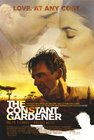 As a child of the Cold War, I thought that I knew what to expect from a film adaptation of John Le Carre, author of numerous best-selling spy thrillers. The Constant Gardener was not even close to my expectations. Fernando Meirelles, the director of City of God, with excellent performances from Ralph Fiennes and Rachel Weisz, shows us a vision of how one man rediscovers and reaffirms his love for his wife after her death. The suspense is driven by emotion rather than gunpowder, the editing is seamless, and the impact is profound. It is the story of how one gentle, introspective man who prefers to lavish love on the small circle of people around him, comes to see the viewpoint of his more outward-looking wife. The film jumps back and forth in time but because the cinematography focuses on the story rather than the sweeping landscapes, the sequences are not intrusive. The focus remains on the people within their surroundings instead of panning merely for visual impact and artistry. With superb acting, beautifully crafted visual direction, and a script that steers clear of trite stereotypes, Gardener is a winner in all aspects.
War is efficient, loosely historical, and blatantly asks the audience to question foreign policy. Gardener, on the other hand, takes the viewer by the hand and shows how forgiveness and understanding in the face of the jackal that most call evil can inspire great feats of personal courage. The second film is the more inspiring, reeling out like a symphony that gently sweeps the audience into quiet thought. In many ways, The Constant Gardener is so sad that the tear ducts may not drip. Rather, you may grow quiet and pensive as two lives unfold and entwine.
I prefer the Gardener's approach. Rumor says that this is a major contender for Oscar fame. But forget what the Academy thinks. In my opinion, it is one of the top ten love stories to grace the more-than-silver screen. In 1985, Out of Africa showed the Africa that once was. Twenty years later, The Constant Gardener gives us another love story set in the Africa that is.
But two serious films back to back is too much. Opera be gone - time for some space opera. Tomorrow evening, I plan to go check out Serenity. Having watched and greatly enjoyed every episode of Joss Whedon's Firefly series, I fervently hope Serenity has enough box office success to revive the cancelled series.
As always, thanks for the insights. Hope I can catch both those films in the near future. Of note, Serenity had an 80% fresh rating on Rottentomatoes.com, and several reviews were suggesting it might be the next Star Wars. Can't wait to see Jar-Jar mix it up with Jane.
T
Great blog...well written. My hat off to ya matey!
Please visit my site!